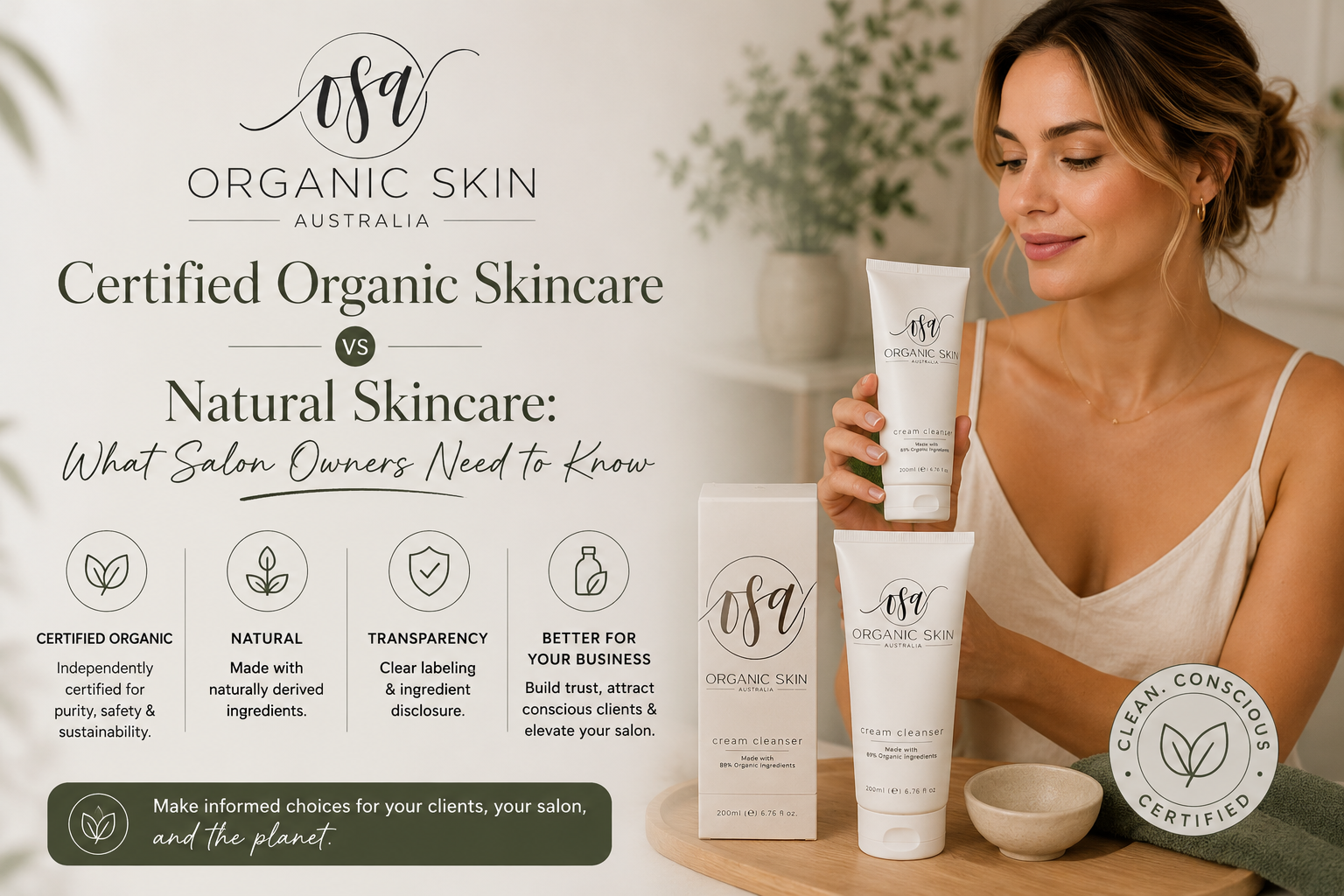
Certified Organic Skincare vs Natural Skincare: What Salon Owners Need to Know
As a salon owner, your clients trust you with more than just their skin. They trust you with their confidence, their time, and their health. Over the last few years, a massive shift has occurred across the Australian beauty industry. Clients are no longer just looking for treatments that work. They want to know exactly what is inside the bottles on your shelves.
This shift has made terms like “natural” and “organic” incredibly popular. However, it has also created a lot of confusion. Many clients, and even some therapists, use these words interchangeably.
For a professional salon, understanding the strict difference between a casual natural claim and a formal organic certification is vital. It is the key to building genuine trust, protecting your professional credibility, and choosing the right stockist for your business.
The Wild West of “Natural” Skincare
If you walk down the beauty aisle of any major Australian retailer, you will see dozens of brands using the word “natural” on their packaging. They often use soft green fonts, imagery of leaves, and claims about being clean or botanical.
In Australia, the term “natural” is largely unregulated in the cosmetics industry. A brand can legally market a product as natural even if it contains only a tiny percentage of plant-derived ingredients alongside a heavy base of synthetic chemicals, artificial fragrances, and harsh preservatives.
This practice is often called greenwashing. While these products are not necessarily harmful, relying on vague natural claims can put your salon’s reputation at risk. If a client with highly sensitive skin has a reaction to a hidden synthetic fragrance in a “natural” product you recommended, their trust in your expertise is broken.
What Makes “Certified Organic” Different?
Certified organic skincare Australia standards are among the strictest in the world. When a product carries a genuine certification logo from a recognized body, it means the entire journey of that product has been independently audited.
Certification leaves no room for clever marketing spin. To earn this title, a brand must prove several things:
- Sourcing: The plant ingredients must be grown without synthetic pesticides, herbicides, or genetically modified organisms.
- Processing: The ingredients must be extracted using clean, mechanical methods that do not rely on harsh chemical solvents.
- Transparency: Brands must clearly state the exact percentage of organic ingredients on the label.
- Banned Ingredients: Certified products completely exclude parabens, sulphates, synthetic dyes, artificial fragrances, and mineral oils.
When comparing organic vs natural skincare, the difference comes down to accountability. “Natural” is a promise made by a marketing team. “Certified organic” is a fact proven by independent scientists.
Understanding Organic Percentages
As you look into salon organic skincare lines, you will notice that even certified organic products rarely claim to be 100 percent organic. It is important to know why this is the case so you can explain it confidently to your clients.
Water, salt, and clay are naturally occurring minerals that cannot be grown. Because they cannot be cultivated under organic farming standards, they cannot be certified as organic. If a high-performance face mask contains 40 percent pure Australian clay and 60 percent organic aloe vera juice, the total certified organic percentage will reflect only the plant portion.
A truly professional organic brand will always display these percentages clearly on the back of the bottle, allowing you to give your clients complete transparency.
Building Salon Credibility and Stockist Trust
Choosing a skincare line for your treatment rooms is one of the biggest decisions you will make as a business owner. Aligning your business with certified organic formulations elevates your salon’s credibility in three distinct ways.
- Guaranteed Safety for Stressed Skin
Modern clients often present with compromised skin barriers, rosacea, or extreme sensitivity. By using products free from synthetic triggers, you drastically lower the risk of post-treatment irritation.
- True Professional Results
There is an old myth that organic skincare is less effective than chemical alternatives. In reality, high-quality organic brands use advanced bio-active extracts. These ingredients are packed with vitamins and antioxidants that the skin recognizes and absorbs easily, delivering beautiful results without inflammation.
- A Partnership Built on Integrity
When you partner with a reputable wholesale supplier, you are not just buying stock. You are investing in education and business support. Working with a brand that has gone through the rigorous process of certification shows that they value integrity just as much as you do.
Frequently Asked Questions
Are natural skincare products completely safe for sensitive skin?
Not necessarily. Because natural claims are unregulated, these products can still contain synthetic fragrances, artificial colors, and strong preservatives that frequently irritate sensitive skin. Certified organic products are a much safer choice for reactive skin because they strictly exclude these common irritants.
How can I check if a brand is genuinely organic in Australia?
Look for a certification logo on the packaging from a trusted independent body, such as Australian Certified Organic or COSMOS. A truly transparent brand will also list the exact percentage of organic ingredients clearly on their label.
Will certified organic products deliver the same results as conventional salon brands?
Yes, and often with less risk of irritation. Modern certified organic salon formulations use potent, concentrated plant actives, vitamins, and antioxidants that actively feed the skin barrier and target concerns like aging, pigmentation, and acne effectively.
Take Your Salon to the Next Level
Ready to elevate your treatment menu and build unshakeable client trust? Partnering with a genuinely certified Australian brand is the best way to future-proof your business.
Explore our professional range and see how we support our salon community with training and marketing resources. Review our tailored wholesale opportunities on our wholesale enquiry page, or fast-track your launch with one of our curated salon setup options by viewing our starter package options today.